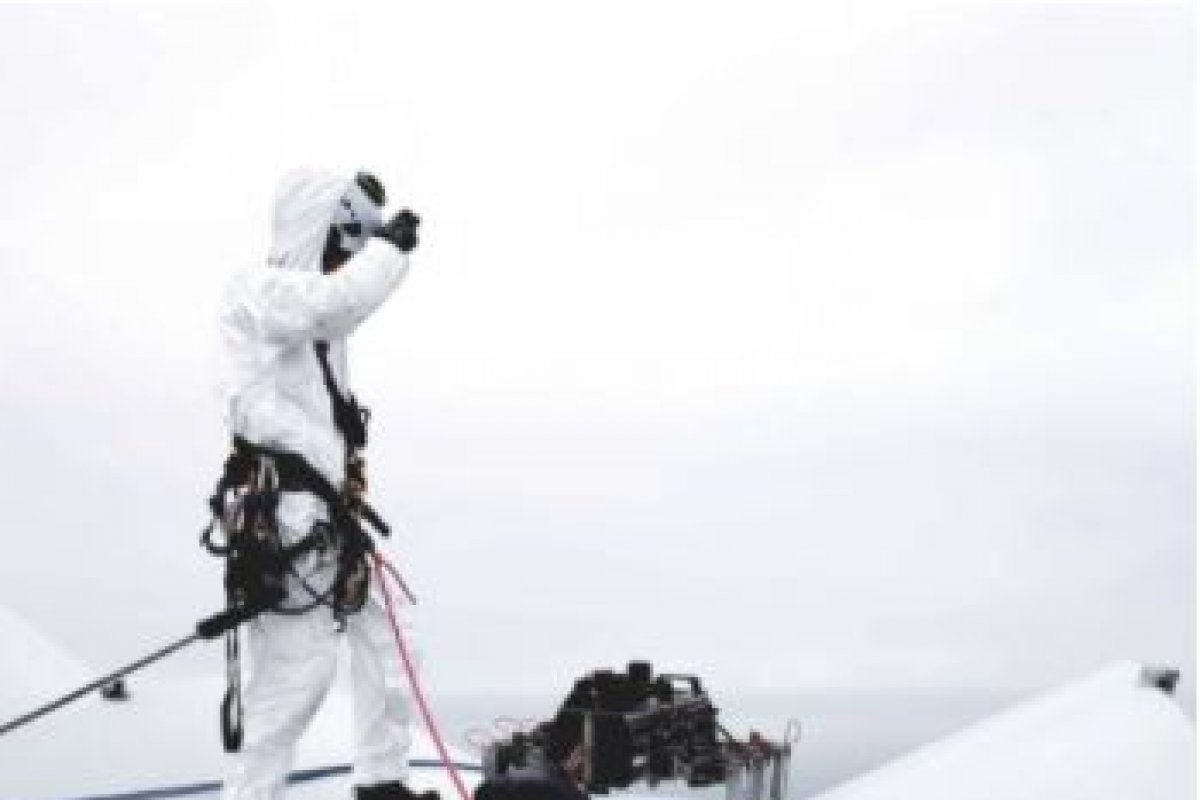
The UK has achieved the world’s first blade walk by a robot on an offshore wind turbine, thanks to BladeBUG and the Offshore Renewable Energy (ORE) Catapult. Over two days in mid-October, the six-legged inspect-and-repair robot repeatedly scaled blades at ORE Catapult’s 7MW Levenmouth Demonstration turbine off the coast of Fife.
BladeBUG represents a 30 per cent cost reduction on current blade inspection techniques, which are conducted by rope-access technicians, with a measurable knock-on effect to the levelised cost of energy. For next generation turbines, ORE Catapult predicts the cost savings could reach as much as 50 per cent. These costs have traditionally been one of the primary areas of concern for offshore operators, as sea conditions and faster tip speeds can lead to significant blade damage over time.
The robot is being developed under a £1 million collaboration project between BladeBUG and ORE Catapult, part funded by Innovate UK. By the project’s end next year, BladeBUG will be capable of inspecting blade surfaces for emergent cracks and imperfections, transmitting data on their condition back to shore and resurfacing the blades.
BladeBUG had previously demonstrated its abilities on blade sections and the vertical training tower at ORE Catapult’s National Renewable Energy Centre in Blyth. The blade walk at an operational offshore wind turbine has now proven that the robot can conduct lengthy deployments in real-world conditions.
During the demonstration, the robot walked 50 metres on a vertically positioned blade on the Levenmouth turbine (a length of 84 metres with the tip reaching 195 metres above the sea when upright).
The crucial capabilities demonstrated during the trial were:
- Perfect adherence of its vacuum-padded feet to blade surfaces in offshore conditions
- Ability to navigate the varying curvature of blade surfaces in a variety of scenarios
- Transmission of data from blade scans and live video feed to technicians demonstrating the BladeBUG’s navigational abilities and placement of feet on changing surfaces.